
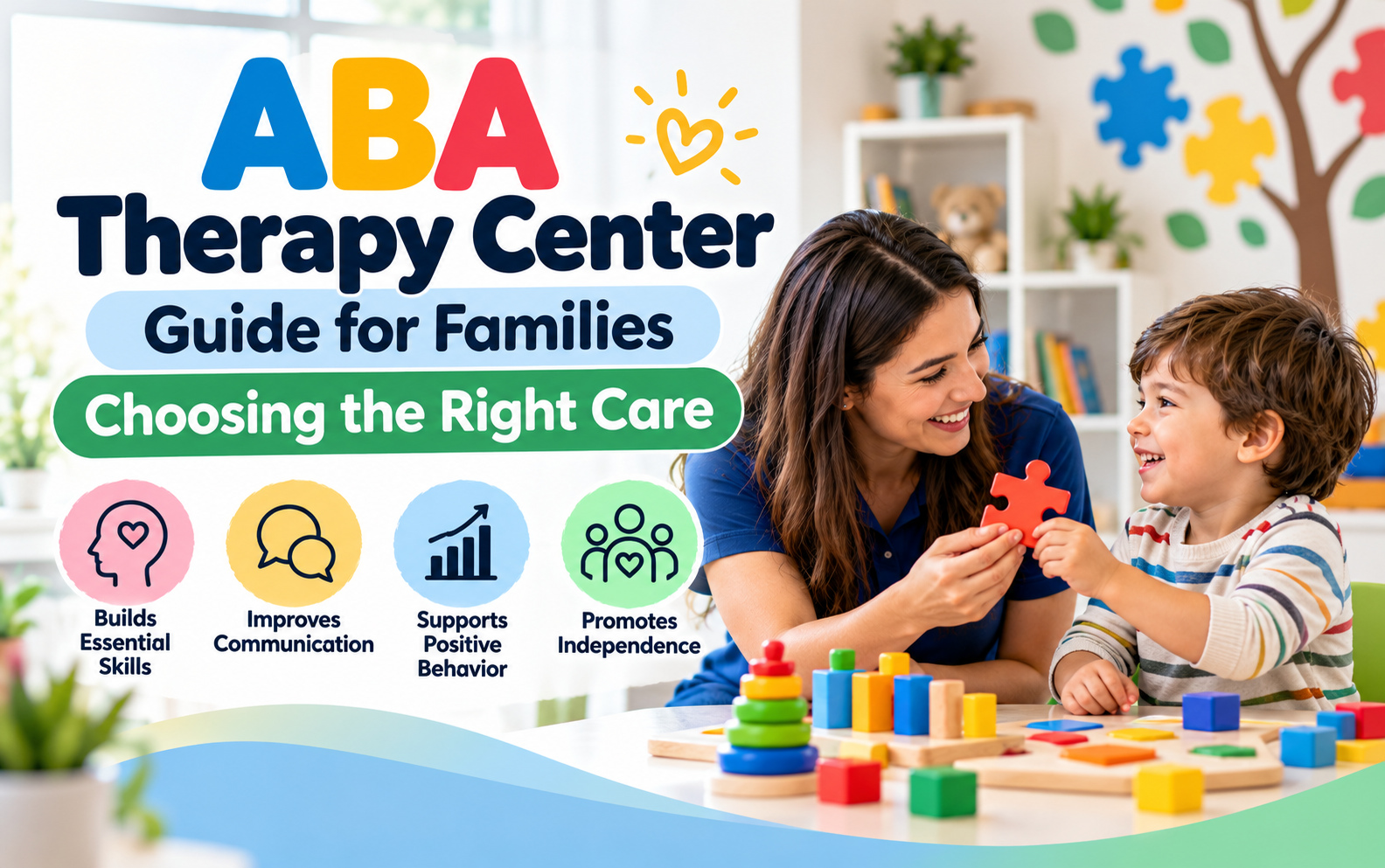
Autism therapy helps children build communication, social and daily living skills. Learn the main types, what to expect and how Georgia families choose.
TL;DR Autism therapy is a set of structured, evidence-informed supports that help autistic children build communication, social, behavioral and daily living skills. No single approach fits every child. Applied Behavior Analysis, speech-language therapy, occupational therapy and developmental models such as the Early Start Denver Model each target different needs, and many children use a combination. The CDC found that about 1 in 31 eight-year-olds in its monitoring network were identified with autism in 2022, so demand for services is high. Starting early helps because young children learn language and social skills at a rapid pace. The right plan begins with a full evaluation, sets goals with the family, and is delivered where the child learns best: home, a clinic, school, the community or online. Insurance, provider credentials and parent involvement should guide the final choice.
When a child is diagnosed with autism spectrum disorder, or even suspected of it, parents face a flood of acronyms and conflicting advice. Waiting for clarity can cost months of valuable learning time, and a poor fit leaves families tired and discouraged. Understanding autism therapy gives you a way to sort the options by what your child actually needs. This guide explains the main approaches, how they differ, what to expect in Georgia and across the United States, and how to choose a plan with confidence. If you are researching or ready to compare providers, the answers below cover what parents ask most about autism therapy.
Quick Answer The best autism therapy is the one matched to your child’s evaluation results, age and family goals. Most children benefit from a mix of Applied Behavior Analysis for skill building, speech therapy for communication, and occupational therapy for sensory and daily living needs. Start with a diagnostic evaluation, request an individualized plan, and choose licensed providers who involve parents.
What is autism therapy?
Autism therapy is any structured, professionally guided intervention that helps an autistic person develop communication, social interaction, learning, emotional regulation and independence. It includes behavioral, developmental, speech-language, occupational and educational approaches, delivered by trained clinicians such as board certified behavior analysts, speech-language pathologists and occupational therapists. Good therapy is tailored to the individual and builds useful skills rather than trying to erase who the child is.
How Autism Is Identified Before Therapy Begins
Therapy starts with identification. Pediatricians screen children for developmental concerns, and the American Academy of Pediatrics recommends autism-specific screening at 18 and 24 months. A positive screen is not a diagnosis. It means a full evaluation by a developmental pediatrician or child psychologist comes next. The National Institute of Mental Health notes that autism symptoms are typically recognizable in the first two years of life, so early signs of developmental delay deserve a prompt conversation with your pediatrician.
Identification is improving. The CDC’s Autism and Developmental Disabilities Monitoring Network reported that about 1 in 31 eight-year-olds across its 16 sites had autism in 2022, up from 1 in 36 in 2020. The CDC stresses that these sites do not represent the whole country. The same report found that children born in 2018 had more evaluations in their first four years than children born in 2014.
Key point: Screening flags a concern and an evaluation confirms it. Autism therapy planning should follow the evaluation, not replace it.
Signs That Justify an Evaluation
- Little response to their name or limited eye contact
- Delayed speech, or words that fade after appearing
- Repetitive movements, lining up objects or a strong need for sameness
- Intense reactions to sounds, textures or lights
- Difficulty with back-and-forth play or sharing attention
Parents who notice several of these should ask for an evaluation rather than wait. Early intervention services in many states can begin based on a developmental delay, without a formal autism diagnosis.
Main Types of Autism Therapy
Autism therapy is not one treatment. It is a toolkit, and each tool serves a different need. The table compares the most common approaches.
| Therapy type | Main focus | Often a good fit when |
|---|---|---|
| Applied Behavior Analysis (ABA) | Skills, routines, behavior support | Child needs help with routines, communication or safety |
| Speech-language therapy | Spoken language, AAC, social communication | Child is nonspeaking, has few words or struggles to converse |
| Occupational therapy | Sensory processing, motor skills, self-care | Child has sensory overload or trouble with dressing and feeding |
| Developmental models (ESDM, Floortime) | Play-based engagement and shared attention | Toddler or preschooler needs help with play and connection |
| Social skills and adapted CBT | Friendships, anxiety, emotional regulation | Older child or teen wants help with peers and worry |
Applied Behavior Analysis (ABA)
Applied Behavior Analysis uses learning principles to teach skills and remove barriers to safe participation. Modern programs are overseen by a Board Certified Behavior Analyst (BCBA) and delivered with trained behavior technicians. They rely on positive reinforcement, natural play and the child’s own motivation. Common teaching tools include behavioral skills training, which uses instruction, modeling, rehearsal and feedback, and functional communication training, which replaces challenging behavior with a communication method that works. Some providers add Acceptance and Commitment Therapy (ACT) so the child’s thoughts and feelings are part of the plan.
What High-Quality ABA Looks Like
- Goals are individualized and chosen with the family
- The child’s assent is respected, and sessions are not built around forced compliance
- Parents receive training and practice the strategies at home
- Progress data is reviewed often and shared with you
- The team coordinates with the child’s other providers
Speech-Language Therapy
Speech-language pathologists work on spoken language, understanding others and social communication. For children who speak little or not at all, they introduce augmentative and alternative communication (AAC), such as picture systems or speech-generating devices. Better communication often reduces frustration, which can ease behavior concerns too.
Occupational Therapy
Occupational therapists help children manage sensory processing differences and build fine motor and self-care skills such as dressing, handwriting and using utensils. Sensory integration approaches and interoception work, which teaches children to notice hunger, thirst and other body signals, often sit in this area.
Developmental and Relationship-Based Models
The Early Start Denver Model and DIR/Floortime build skills through play, shared attention and emotional connection. Therapists usually train parents to use the strategies all day, which multiplies practice time far beyond the clinic hour.
Social Skills Groups and Counseling
Older children and teens may benefit from social skills groups and cognitive behavioral therapy adapted for autism. These approaches target friendships, anxiety and emotional regulation.
Key point: Most children do best with a coordinated team. The behavior analyst, speech-language pathologist and occupational therapist should share goals instead of working in silos.
Where Autism Therapy Happens
The setting shapes how well skills carry over into daily life. Many families blend settings as the child grows.
| Setting | Strengths and trade-offs | Often best for |
|---|---|---|
| Home | Practice in real routines, but fewer peers | Toddlers, daily routines, parent training |
| Center | Structured space and peers, but travel is needed | Social skills and school readiness |
| Virtual (telehealth) | Reaches rural families, but needs a caregiver on screen | Parent coaching and families far from clinics |
| In school | Supports classroom goals, but depends on district policy | School-age children with classroom goals |
| Community | Real-world practice, but less controlled | Safety, shopping and dining skills |
Autism Therapy at Home vs Center-Based Care
Home-based sessions teach skills where they are used, such as mealtimes, bedtime and play with siblings. Center-based care adds a purpose-built space, nearby clinical staff and chances to practice with peers. Neither is better in every case. A young child with routine and behavior goals often starts at home, then adds a center for social learning. Ask your team which setting fits each goal.
What an Autism Therapy Plan Looks Like Step by Step
- Evaluation. A qualified clinician confirms the diagnosis and identifies strengths and needs.
- Family goals. You and the team decide what matters most, such as requesting snacks, tolerating haircuts or joining circle time.
- Assessment. Each therapist assesses current skills and writes a treatment plan with measurable goals.
- Sessions. Therapy runs at the agreed frequency, and staff track data on every goal.
- Parent training. Caregivers learn to use the same strategies so skills show up outside sessions.
- Review. The team reviews progress every few months, updates goals and plans for transitions such as kindergarten.
The number of weekly hours should come from the assessment and the child’s needs. Be cautious of any provider that sets hours before meeting your child.
Key point: A strong plan has measurable goals, parent training and a scheduled review. If any of the three is missing, ask why.
Early Intervention and School Services in Georgia
For children from birth to age three, Georgia’s Babies Can’t Wait program provides early intervention under Part C of the Individuals with Disabilities Education Act. Around age three, the local school district can evaluate a child for preschool special education, and a team may write an Individualized Education Program (IEP). Private therapy can run alongside these services. The best providers coordinate with school staff so strategies stay consistent across settings.
Insurance and Cost
Coverage depends on your plan type. Fully insured commercial plans, self-funded employer plans, Medicaid and TRICARE follow different rules, and ABA, speech and occupational therapy are often authorized separately. Georgia families may also explore Georgia Medicaid, PeachCare for Kids and the Katie Beckett waiver, depending on eligibility.
Most plans require a formal diagnosis and a treatment plan that shows medical necessity. Ask your insurer which provider types are covered, whether prior authorization is required and how many hours are approved. Ask the provider for a written estimate of your out-of-pocket costs before sessions begin.
Benefits, Limits and Criticism of Autism Therapy
Honest guidance includes the trade-offs. Research supports early, individualized intervention, yet outcomes vary from child to child, and therapy does not cure autism. Some autistic adults criticize older behavioral programs that focused on compliance and on suppressing harmless behavior such as stimming. Current professional guidance, including practice guidelines from the Council of Autism Service Providers, emphasizes assent, individualization and the child’s quality of life.
| Strengths | Limits |
|---|---|
| Builds communication and daily living skills | Results vary and are not guaranteed |
| Gives parents practical tools | Requires time, travel and family involvement |
| Can lower safety risks and frustration | Quality differs widely between providers |
| Adapts across home, school and community | Poorly designed programs can feel stressful |
How to Choose an Autism Therapy Provider
Credentials come first. Look for a BCBA for behavior programs, a licensed speech-language pathologist and a licensed occupational therapist. Then look at how the team works.
Questions to Ask on a First Call
- Who writes and supervises my child’s plan, and how often?
- How do you involve parents and measure progress?
- How do you respect my child’s comfort and assent?
- Do you coordinate with our pediatrician, school and other therapists?
- What is your current availability, and which insurance plans do you accept?
Red Flags
- Promises of a cure or guaranteed results
- No assessment before a fixed schedule is set
- Parents barred from observing or training
- Dismissing a child’s distress as noncompliance
What Parents and Professionals Say About Autism Therapy
Community discussions on parent forums and professional circles are mixed, which is useful. The patterns below reflect the general consensus rather than any single post.
What most people misunderstand
Many newcomers assume autism therapy aims to cure autism, that more hours always mean better results, or that a diagnosis must come before any help. In practice, therapy builds skills and supports, quality matters more than raw hours, and early intervention can begin while evaluation is still underway. Another misconception is that every ABA program looks the same. Approaches differ widely in how child-led and parent-focused they are.
Common mistakes
Parents most often regret waiting too long for an evaluation, choosing a provider only by waitlist or price, and skipping parent training. Other frequent mistakes include stacking many therapies without coordination, switching providers before giving a plan time to work, and overlooking signs that a child is distressed in sessions.
What experienced users and professionals recommend
Experienced families suggest observing a session before committing, asking to see progress data, and insisting on assent and respectful teaching. Professionals advise training every caregiver, practicing skills in more than one setting and reviewing goals every few months so the plan grows with the child.
What is the best therapy for autism?
There is no single best option. ABA, speech-language therapy, occupational therapy and developmental models serve different needs, and many children use several. The best plan follows your child’s evaluation and your family’s goals.
At what age should autism therapy start?
As soon as concerns appear. Screening is recommended at 18 and 24 months, and early intervention can begin before a formal diagnosis. Older children and teens also benefit from therapy matched to their needs.
Is autism therapy covered by insurance?
Often, but coverage depends on the plan. Most require a diagnosis and a treatment plan showing medical necessity. Contact your insurer to confirm covered therapies, prior authorization rules and approved hours.
Can autism be cured with therapy?
No. Autism is a lifelong neurodevelopmental difference. Therapy builds communication, independence and coping skills, and good programs aim to improve quality of life rather than remove autistic traits.
How many hours of autism therapy does a child need?
It varies. A qualified clinician sets hours after assessing the child’s skills, age, goals and family capacity. Be wary of any fixed schedule offered before an assessment.
Frequently Asked Questions About Autism Therapy
How do I know if my child needs autism therapy?
Start with your pediatrician and describe what you see, such as limited response to their name, delayed speech, repetitive play or strong sensory reactions. Ask for an autism-specific screening and a referral for a full evaluation. A diagnosis opens doors to insurance coverage and school services, but you do not have to wait for it to seek help. Speech therapy, occupational therapy and early intervention programs can often begin when a developmental delay is documented. If your child already has a diagnosis, ask the evaluator which areas to prioritize, such as communication, behavior, sensory needs or social skills, so that therapy targets what matters most.
What is the difference between ABA and speech therapy?
ABA focuses on teaching skills and supporting behavior through reinforcement, practice and data tracking. Speech-language therapy focuses specifically on communication, including speech sounds, vocabulary, conversation and AAC devices. The two overlap. A behavior analyst may teach a child to ask for a break, while a speech-language pathologist builds the words or device the child uses to do it. Children often receive both, and the strongest programs have the providers share goals so the child hears consistent language and expectations everywhere.
How do I choose an autism therapy provider in Georgia?
Verify credentials first: a BCBA for behavior programs, licensed speech-language pathologists and occupational therapists. Confirm they accept your insurance, including Georgia Medicaid or PeachCare for Kids if relevant. Ask how they train parents, track progress and respect the child’s assent. Visit the clinic or request a trial observation, and ask about availability, since waitlists vary. Choose a team that explains the plan in plain language, welcomes your questions and coordinates with your school and pediatrician. Trust your sense of how your child responds to the staff.
Can autism therapy take place at home?
Yes. Home-based autism therapy is common, especially for toddlers and preschoolers. Sessions happen in everyday routines such as meals, play and bedtime, so skills transfer easily. Parents see the strategies firsthand and can use them between visits. Home therapy may offer fewer peer interactions, so many families add a center, school or community component as the child grows. Telehealth is another option for parent coaching or families far from clinics. The right mix depends on your child’s goals, your schedule and what your insurance authorizes.
Choosing autism therapy becomes manageable once you separate the decisions. First confirm the diagnosis, then match approaches to your child’s needs, then pick a setting and a team that respects your child and trains your family. Quality shows up in measurable goals, regular reviews and honest answers when progress is slow. No plan is perfect, and adjusting is part of the process. Whether you are in Georgia or elsewhere in the United States, starting the conversation early gives your child more time to build skills that last. Take the first step by calling your pediatrician and requesting an evaluation.
Key Takeaways
- Autism therapy is a toolkit of ABA, speech-language, occupational, developmental and social skills approaches, not a single treatment.
- The CDC reports about 1 in 31 eight-year-olds identified with autism in its 2022 monitoring network data.
- Screening is recommended at 18 and 24 months, and early intervention can start before a formal diagnosis.
- Home, center, virtual, school and community settings each have strengths, and many families combine them.
- Strong plans have measurable goals, parent training, respect for assent and regular reviews.
- Insurance rules vary, so confirm covered therapies, authorizations and costs before starting.
- Therapy builds skills and supports. It does not cure autism.